WHAT SHOULD BE THE PURPOSE OF EDUCATION?
Hello Bloggers!
 To
begin this blog I will discuss what I believe should be the purpose of
education and why. I will also explore different perspectives on what quality
pedagogy entails as well as what it means to me. I believe the purpose of
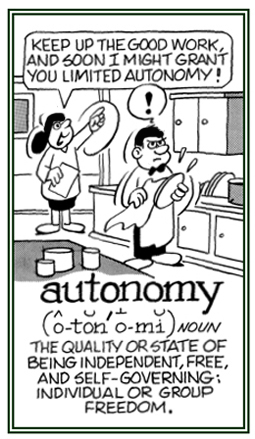
education is to develop creative and autonomous thinkers. However, this does
not seem to be at the heart of education today. Politicians and government
believe that the point of education is to improve the economy (Hicks, 2010).
This is supported by neo-liberalist approaches within school settings such as,
PISA (Programme of International Standardised Assessments), where we are
competing with other countries to have the best exam results. This indicates a ‘measurable’
education and according to Wiercinsky (2011), it is difficult to be creative
when you have a ‘manufactured’ and measurable education system. Therefore
children are taught how to pass exams, not to retain knowledge and be
independent thinkers. This reflects a type of pedagogy where teachers are just
transmitting knowledge. Montessori (1912), disapproves of this kind of pedagogy
where teachers expect children to sit and listen rather than have creative and
experiential learning. This is similar to what Freire (1996) believed, as he
thought if learners used first hand, relevant experiences to help solve
problems, as well as creativity, it would have a positive impact to their
education.
To
begin this blog I will discuss what I believe should be the purpose of
education and why. I will also explore different perspectives on what quality
pedagogy entails as well as what it means to me. I believe the purpose of
education is to develop creative and autonomous thinkers. However, this does
not seem to be at the heart of education today. Politicians and government
believe that the point of education is to improve the economy (Hicks, 2010).
This is supported by neo-liberalist approaches within school settings such as,
PISA (Programme of International Standardised Assessments), where we are
competing with other countries to have the best exam results. This indicates a ‘measurable’
education and according to Wiercinsky (2011), it is difficult to be creative
when you have a ‘manufactured’ and measurable education system. Therefore
children are taught how to pass exams, not to retain knowledge and be
independent thinkers. This reflects a type of pedagogy where teachers are just
transmitting knowledge. Montessori (1912), disapproves of this kind of pedagogy
where teachers expect children to sit and listen rather than have creative and
experiential learning. This is similar to what Freire (1996) believed, as he
thought if learners used first hand, relevant experiences to help solve
problems, as well as creativity, it would have a positive impact to their
education.
Bartlett
and Burton (2016) suggests that pedagogy is the method which teachers use to instil
knowledge to learners. However, Donaldson (2015) believes that there is more to
pedagogy than just approaches used within classrooms, teachers should be able
to inspire children to want to learn by being creative and innovative. This is
further reflected within the
Plowden Report as it explored the importance of creative pedagogical approaches
and child centred learning (Bartlett and Burton, 2016).
According to
Roberts (2006), there is a strong link between effective independent learning
and creativity. This is supported through school autonomy and student voice (DfES,
2003). Waite (2011), believes that teachers need to give learners opportunities
to have autonomy over their education, as they are more likely to have an
effective learning experience if they pick and enjoy the activity or task. Many
schools have incorporated a ‘student voice’ approach to give children the
opportunity to communicate with teachers about what they would like to learn
and in what way. It then becomes the responsibility of the teacher to
incorporate those ideas into their pedagogy whilst linking it back to the
curriculum. This is successful when both teachers and children are given autonomy
over teaching and learning. Carroll
and McCulloch (2014) state that teachers should have some autonomy in what they
teach and how they teach it. This so that
teachers are then role modelling autonomy and creativity, to encourage children
to do the same (Donaldson, 2010). Children are then enabled to learn more effectively.
Erikson (1959) suggests that autonomy is developed within us throughout our
primary years and it is the teacher’s role to provide learners with
opportunities to practice autonomy. Carroll and McCulloch (2014) state that if
children do not then it can have a negative impact on their social and
emotional well-being as it can hinder their ability to develop their independence
and confidence.
I
believe education is changing constantly as we move towards a more holistic
learning approach within Welsh schools, following Donaldson’s review of the curriculum
in Wales. However, it will be hard to implement, as we still have standardised
tests which can make the curriculum rigid. This creates a barrier to learner
autonomy and creative development which I strongly believe should be
highlighted as one of the purposes of education.
Reference
list:
Bartlett,
S., and Burton, D. (2016) Introduction
into Educational Studies, 4th edn. London: SAGE Publications Limited
Carroll, M and McCulloch, M. (2014) Understanding and Learning in Primary Education. London: SAGE Publications Limited
DfES (2003). Green Paper; Every Child Matters: Change for Children. Department for Education and Skills.
Donaldson, G. (2010) Teaching Scotland’s Future: Report of a Review of Teacher Education in Scotland. The Scottish Government.
Carroll, M and McCulloch, M. (2014) Understanding and Learning in Primary Education. London: SAGE Publications Limited
DfES (2003). Green Paper; Every Child Matters: Change for Children. Department for Education and Skills.
Donaldson, G. (2010) Teaching Scotland’s Future: Report of a Review of Teacher Education in Scotland. The Scottish Government.
Donaldson, G. (2015). Successful futures: Independent Review of Curriculum and Assessment Arrangements in Wales. Welsh Government.
Erikson, E. H. (1959) Identity and the Life Cycle. New York: International Universities Press
Freire, Paulo. (1996). Pedagogy of the Oppressed. London: Penguin
Hicks, D. (2010, July). 'The long transition: Educating for optimism and hope in troubled times'. In 3rd annual conference of the UK teacher education network for education for sustainable development/global citizenship (1-28).
Montessori, Maria (1912). The Montessori Method. New York: Frederick A. Stokes Company.
Roberts, P. (2006) Nuturing Creativity in Young People: a report to Government to inform Education and Skills. Available at:
http://www.robbyersuk.com/uploads/9/6/3/9/9639378/nuturing_creativity_in_young_people_report.pdf
(Accessed: 04.11.17)
Waite, S. (2011) Children Learning Outside the Classroom. London: SAGE Publications Limited
Wiercinski, A. (2011). Hermeneutic Education to Understanding: Self-education and the Willingness to Risk Failure. Education, Dialogue and Hermeneutics. London: Continuum International Publishing Group.


Comments
Post a Comment